


Table of Contents
Table of Contents
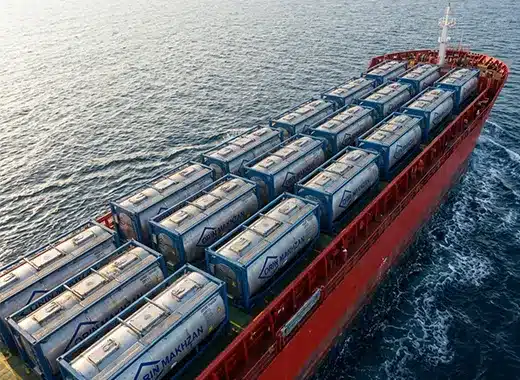
An isotank, or ISO Tank Container, is one of the most widely used pieces of equipment for transporting liquid cargo worldwide. When international transportation of liquid goods required standardization, the first models of ISO tanks were introduced in Europe in the 1960s. Prior to that, bulk liquids were mainly transported using road tankers or small drums, which were both costly and high‑risk methods.
With the approval of key standards by the International Organization for Standardization (ISO) in particular ISO 668, which has served as the reference for container dimensions since 1979, and ISO 1496/3 (technical specifications for tank containers) the legal and technical foundation of this industry was established.
In Iran, starting from the 2010s (1390s SH), with the development of the South Pars phases and the significant growth in exports of petrochemical products especially methanol, urea, acids, and industrial oils isotanks became a vital and indispensable option for land (cross border) and maritime (export) transportation. In this article, all technical, commercial, and safety aspects of isotanks are examined.
1. Classification of Isotank Types Based on Legal Transport Regulations
| row | Tank Code | Type or application | Technical description |
|---|---|---|---|
| 1 | T1 | For transporting light liquids such as water, syrups, and cleaning solutions | The lowest-pressure model, design pressure typically 1.75 bar |
| 2 | T4 | For transporting non-hazardous oils | Top manhole and bottom discharge valve; working pressure approximately 2.65 bar |
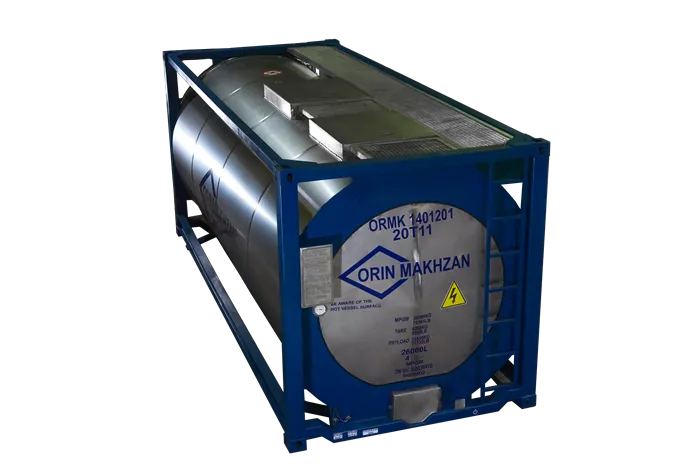
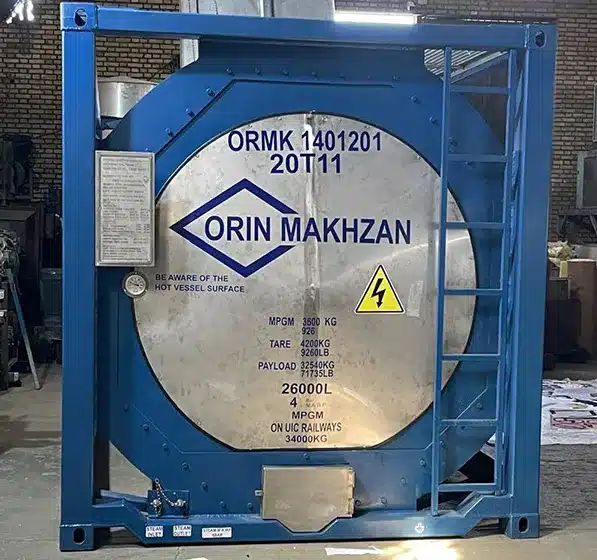
| 3 | T11 | For transporting non-hazardous chemical materials | The most commonly used model in general industries; design pressure of approximately 4 bar |
| 4 | T12 | For non-corrosive materials with high temperature fluctuations | Similar to T11 but with steam injection capability or an internal heating system |
| 5 | T14 | For transporting hazardous chemical materials | With a working pressure of approximately 6.6 bar and a reinforced shell (316L or 316Ti) |
| 6 | T20 | For transporting liquefied gases with medium pressure | Design pressure of approximately 8.4 to 10 bar |
| 7 | T22 | For transporting corrosive materials and substances more hazardous than T14 (such as acids) | Thicker shell walls, multi-stage safety relief valves |
| 8 | T23 | For extremely hazardous materials (such as nitric acid and formaldehyde) | Design pressure higher than 10 bar |
| 9 | T50 | For transporting various fuels, LPG, and compressed gases | Design pressure is typically 17 to 21 bar (with a fully steel shell) |
| 10 | T75 | For liquefied gases at cryogenic temperatures (Cryogenic Tanks) such as oxygen, nitrogen, and LNG | Featuring vacuum insulation with an operating temperature down to minus 196°C |
| 11 | T100 | For special projects, military applications, or aerospace industries | Custom-designed for pressures above 40 bar or special temperature conditions |
Under the updated ISO 1496-3 and ADR 2023 standards, the pressure gauge, safety relief, manhole, vent, and data plate are considered mandatory components, while all other items are classified and documented in the design as optional equipment.
The higher the isotank code number, the higher the design pressure and the greater the tank’s resistance to operating conditions. In general, T1 to T14 classes are primarily used for transporting liquids (including light materials, oils, and chemical substances), while T20 and higher classes are designed for gases, fuels, and high‑pressure materials.
2. Classification of Isotank Types Based on the Type of Transportable Material
| Row | Type of Isotank | Transportable Product Type | Technical Description and Applications |
|---|---|---|---|
| 1 | (Standard ISO Tank) | For transporting non-hazardous liquids and some general chemical materials | This type has the widest application. It is made of 304L or 316L stainless steel and typically has a usable capacity of 24,000 to 26,000 liters. It is suitable for transporting oils, non-hazardous solutions, and food products under normal conditions. |
| 2 | (Hazardous ISO Tank) | For specialized standards for transporting hazardous chemical materials | Manufactured in accordance with ADR and IMDG standards; equipped with a reinforced safety relief valve, a robust frame, and high-pressure testing. It is suitable for acids, industrial solvents, and corrosive materials. |
| 3 | (Cryogenic ISO Tank) | For transporting liquefied gases such as oxygen, nitrogen, and argon | It features a multilayer thermal insulation system and a double-walled tank. It operates at extremely low temperatures down to minus 196 degrees Celsius and is capable of long-term storage and transportation of liquefied gases. This model is used in cryogenic and energy projects, and Orin Makhzan manufactures these models on a custom basis. |
3. Classification of Isotank Types Based on Standard Dimensions
| Row | Type | Length (ft) | Approx. Volume (L) | Tare Weight | Application Description |
|---|---|---|---|---|---|
| 1 | ISO Tank 20ft | 20 ft (Approximately 6.058 meters) | 21,000 to 26,000 liters | 3.5 to 4.0 tons | The most common size for transporting bulk liquids such as chemical materials, oils, and drinking water |
| 2 | ISO Tank 23ft (High Capacity) | 23 ft (Approximately 7.010 meters) | 26,000 to 28,000 liters | 3.8 to 4.2 tons | For cargoes with lower density but larger volume |
| 3 | ISO Tank 25ft | 25 ft (7.620 meters) | 28,000 to 30,000 liters | Approximately 4.2 tons | Less common; intended for specific rail routes |
| 4 | ISO Tank 30ft (Extended) | 30 ft (Approximately 9.125 meters) | 30,000 to 35,000 liters | 4.5 to 5.0 tons | Designed for transporting fuels, liquid food products, and light hazardous materials |
| 5 | ISO Tank 40ft (Super Capacity) | 40 ft (12.192 meters) | 35,000 to 36,000 liters | 5.0 to 6.0 tons | Mostly used for gases or bulk food-grade materials such as fruit juice or alcohol |
| 6 | Small Tank (10ft و 13ft) | 10–13 ft | 10,000 to 15,000 liters | Approximately 2.5 to 3.5 tons | Designed for testing, sampling, or short urban routes |
| 7 | Swap Body Tank (Widely used in Europe) | 23–25 ft | Up to 35,000 liters | _ | A different frame designed for rail transport on European routes |
| 8 | Gas ISO Tank (For Liquefied Gas) | 20 ft | 17,000 to 24,000 liters under 15 to 24 bar pressure | 4.0 to 4.5 tons | For LPG, ammonia, CO₂, and other gases |
| 9 | Reefer ISO Tank (Refrigerated) | 20 ft | 21,000 to 24,000 liters | 4.0 to 4.5 tons | For transporting liquid food products such as milk or fruit juice with a temperature control system |
4. Classification Based on Thermal Structure
Standard Non‑Insulated Tanks: The most common type, without additional thermal insulation. Suitable for cargoes that do not require temperature control or for which ambient temperature conditions are sufficient.
Insulated Tanks (T11/T14): These tanks include an insulation layer (such as rock wool or polyurethane foam) between the inner and outer shells. This feature is essential for transporting materials that must remain at a relatively stable temperature.
Heated Tanks (T16): Equipped with external or internal heating systems (such as steam coils or electric heaters). These models are commonly used for transporting materials such as asphalt, bitumen, or heavy oils that solidify or become highly viscous at ambient temperatures. These tanks are directly associated with heating requirements within the logistics cycle.
5. Based on Application and Nature of the Cargo
T-Code Tanks (for hazardous chemicals): These tanks are classified based on the UN T-Code system (such as T11 for flammable liquids with a high boiling point).
Food Grade Tanks (food-grade isotanks): These tanks are manufactured in accordance with the highest hygiene standards. Their stainless steel must be fully polished (sanitary) and comply with HACCP or FDA standards. These types of isotanks are used for transporting milk, drinking water, fruit concentrates, syrups, and edible oils.
Refrigerated or Cryogenic Tanks: Designed for transporting liquefied gases at extremely low temperatures (such as liquid nitrogen).
The International Organization for Standardization (ISO), by approving key standards, particularly ISO 668 (container dimensions and capacities) and ISO 1496/3 (technical specifications for tank containers), established the legal foundation of this industry.
In Iran, since the 2010s, with the development of the South Pars phases and the significant growth in exports of petrochemical products, especially methanol, urea, acids, and industrial oils, isotanks have become a vital and essential option for land (cross-border) and maritime (export) transportation. In this article, all technical, commercial, and safety aspects of isotanks are examined.
🔗 To learn about the different types of isotanks, read this article: Types of Isotanks
Advantages of Isotanks
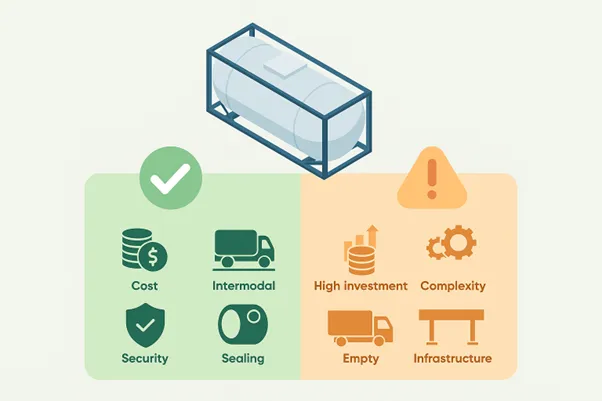
An isotank is a standard tank designed for the safe transportation of chemical substances and industrial liquids. The advantages of isotanks include high durability, reusability, and enhanced transportation safety, while their disadvantages include high initial cost, heavy weight, and the need for periodic inspection.
High safety and leak prevention: Pressure vessel design, the use of high‑grade stainless steel, and multiple safety devices minimize the risk of leakage or explosion.
Environmental protection and waste reduction: According to ITCO data, the use of isotanks reduces packaging waste by approximately 90 percent compared to drums or IBCs. This approach is aligned with Orin Makhzan’s sustainability policies in manufacturing.
Product quality preservation: The presence of a heating jacket and thermal insulation maintains uniform transfer temperature, preventing quality changes in sensitive materials.
Reduction of logistics costs: Modular design and 20‑foot dimensions enable rail, road, and sea transportation simultaneously through multimodal transport. According to ITCO data, this method is 30 to 40 percent more cost‑effective than drum transportation.
Long service life: Proper maintenance can extend the useful lifespan of the tank to more than 20 years.
Reusability system: The stainless steel body and DN80 industrial valves allow isotanks to achieve a service life exceeding 20 years. All tanks are supplied with testing capability and a 10‑year periodic inspection certification in accordance with ISO 1496‑3.
Full compliance with international standards: All isotanks produced by this company are capable of obtaining international plates and approvals such as ADR, IMDG, and CSC, enabling operation on international transport routes without the need for additional packaging.
Optimized loading and unloading: Bottom and top discharge valve design reduces loading and unloading time by up to 50 percent. All valves are manufactured and tested in accordance with ASME B31.3 and DN80 Clover Clamp standards.
Customization for specific industries: Orin Makhzan produces specialized models including Food Grade, Pressure Type, and Cryogenic Tanks tailored to material characteristics, from heating systems to vacuum insulation and double‑shell design.
Disadvantages of Isotanks
High initial cost: Due to the use of stainless steel such as grade 316L or 304L and pressure testing based on the ASME IX standard, the initial manufacturing cost is higher than drums or simple tanks. However, a service life of more than 20 years and reusability allow this cost to be recovered over time.
Need for appropriate loading and unloading equipment: Isotanks require industrial valves and fittings for safe unloading. In locations without suitable infrastructure, operations may be slower. Orin Makhzan simplifies this process by designing standard DN80 connections and providing auxiliary equipment such as compatible hoses and fittings.
Limitations for highly viscous or temperature‑sensitive materials: Materials with high viscosity require controlled heating for complete discharge, which some standard models lack. Models equipped with heating jackets solve this issue and provide uniform heating.
Requirement for periodic inspection and specialized maintenance: According to international standards, each isotank must undergo technical inspections at regular intervals. For this reason, Orin Makhzan provides after‑sales services and maintenance guidelines alongside the product in export projects, allowing users to perform these processes without sending the tank away for servicing.
🔗 For a more detailed comparison, read the article: Advantages and Disadvantages.
Components of an Isotank and Its Operating Mechanism
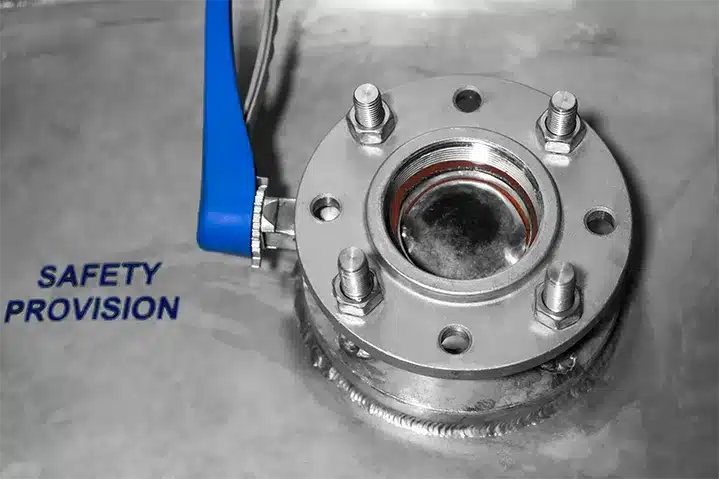
Isotanks are designed and manufactured in accordance with international standards including ISO 1496-3, ADR 2023, the IMDG Code, and ASME IX. In the design of this equipment, mechanical, thermal, and hydrodynamic parameters are calculated with high precision to ensure the safe transportation of chemical, food-grade, and hazardous materials. At Orin Makhzan, the design of these tanks is carried out using stress analysis, CFD simulation software, and international loading requirements.
The main structural components of an isotank include:
An efficient isotank is a set of engineered components responsible for containment, safety, and cargo discharge.
A) Main Shell:
The tank shell is typically made of stainless steel, most commonly grade 316L or 304L, to provide the necessary chemical resistance against corrosion for transporting a wide range of materials. For extremely low-temperature liquids such as liquefied gases or materials requiring thermal insulation, double-wall or jacketed designs are used.
B) Metal Frame:
The outer frame forms the main structural support and is responsible for weight distribution, providing forklift handling points, and enabling installation on standard transport vehicles. This frame must withstand significant loads encountered during handling at terminals and maritime transport.
C) Valves and Critical Fittings
The following components are essential for proper isotank operation:
Manhole (inspection hatch):
This large hatch, usually located on the top of the tank, allows authorized personnel to enter for internal inspection, cleaning, and installation of measuring equipment. It must be equipped with secure locking mechanisms to prevent accidental opening.
Valves Set:
This includes the main bottom discharge valves and filling valves. The discharge valve must be designed for hazardous materials transport, such as disc or diaphragm valves that are highly resistant to leakage.
Safety Relief:
This critical mechanism controls excess internal tank pressure caused by temperature increases or internal chemical reactions and prevents tank rupture. Isotanks are typically equipped with two main relief systems: pressure relief valves and vacuum relief valves.
Gaskets:
Sealing gaskets at the manhole and valve connections play a crucial role in preventing leakage of hazardous materials. The gasket material must be compatible with the chemical nature of the cargo, for example PTFE for corrosive chemicals.
Document Holder:
A waterproof compartment used to store essential cargo documentation, including MSDS sheets, test certificates, and inspection records.
Anti-surge Baffles:
Internal plates inside the tank that reduce fluid surge during acceleration or braking, improving overall tank stability.
Elliptical Dish Ends:
Designed to distribute internal pressure evenly, their shape also facilitates smooth flow and complete drainage of the liquid.
Vent and Pressure Relief System:
Used to control internal pressure and prevent explosion under emergency conditions.
Supports and Manholes:
These include ladders, the top manhole for internal inspection and cleaning, and support pads that secure the tank within the metal frame.
Insulation and External Cladding:
Depending on the type of liquid, insulation materials such as fiberglass, polyurethane, or rock wool may be used to reduce heat exchange.
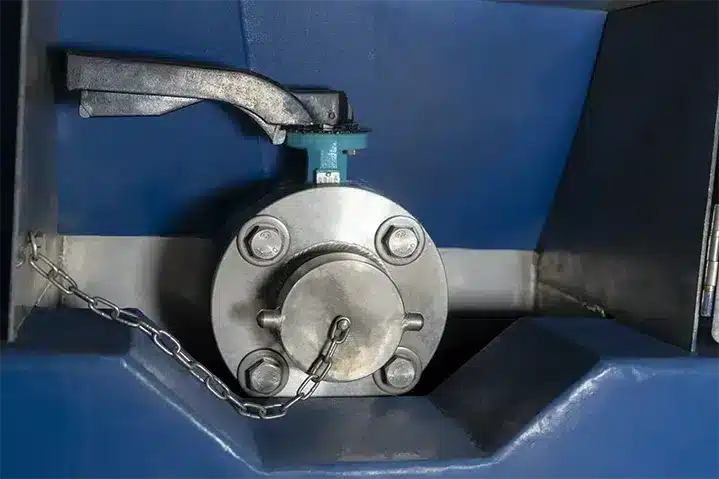
Control and safety components
| Component | Equipment Type | Function | Technical specifications (standard or material) |
|---|---|---|---|
| Bottom Discharge Valve | Bottom Discharge Valve | Controlled discharge of fluid from the bottom of the tank | DN80 diameter, SS 316L material, PTFE sealing, ASME B16.5 design |
| Safety Relief Valve | Safety Relief Valve | Automatic release of excess internal pressure | Set pressure: 6.5 bar, compliant with ADR 2023 |
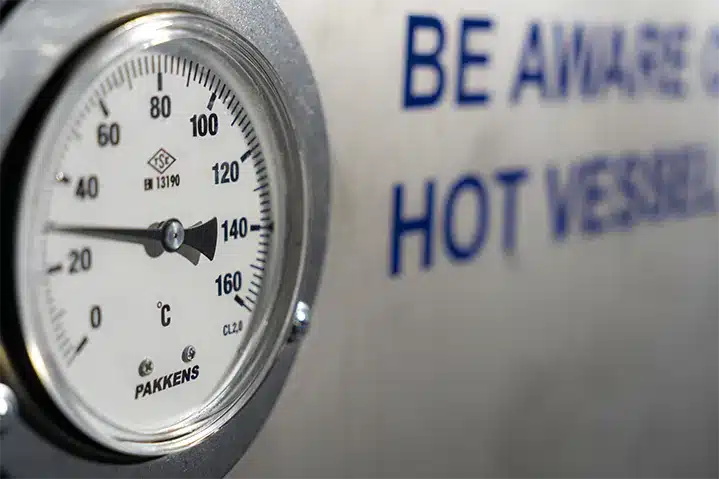
| Pressure Gauge | Pressure Gauge | Real-time indication of internal tank pressure | Digital or analog type, stainless steel body |
| Top Manhole | Manhole Cover Ø 500 mm | Access for inspection, sampling, cleaning, or filling | Equipped with a safety lock, silicone sealing, operating pressure up to 9 bar |
| Ventilation System / Vent Valve | Vent System | Air pressure equalization to prevent vacuum or sudden pressure buildup | Equipped with a protective filter, pressure design ±0.2 bar |
| Level Gauge | Level Indicator / Dip Stick | Monitoring liquid level or estimating stored volume | New versions equipped with an electronic Level Sensor |
| Temperature Gauge | Temperature Gauge | Temperature control for sensitive materials (food-grade, chemical, or cryogenic) | Digital display with PT100 sensor, temperature range -50 to +200 °C |
| Heating / Cooling System | Steam / Heating Coil Lines | Maintaining temperature or liquefying solidified materials | 316L stainless steel spiral piping, steam pressure up to 6 bar |
| Earthing Connection | Grounding Point | Preventing electrostatic discharge during loading and unloading | Stainless steel grounding rod, compliant with EN ISO 10204 |
| Sampling Valve | Sampling Valve | Fluid sampling without opening the manhole | 25 mm valve with NPT thread and PTFE sealing |
| Tank Identification Plate | Data Plate / ID Plate | Inclusion of tank information and technical specifications | Includes UN Tank Type code, serial number, capacity, and year of manufacture autorenew thumb_up thumb_down |
Under the updated ISO 1496-3 and ADR 2023 standards, the pressure gauge, safety relief, manhole, vent, and data plate are considered mandatory components, while all other items are classified and documented in the design as optional equipment.
Coordinated operation of equipment
At the time of loading, the discharge valve is closed and the venting system is open to allow air to escape.
During transportation, all valves are placed in a secure locked position, and the pressure gauge monitors the internal pressure.
During unloading, the vent valve is opened first, then the DN80 valve is gradually activated to control the flow, and excess pressure is safely released by the safety relief valve within the 4 to 6 bar rang
Manufacturing process at Orin Makhzan
Sheet cutting and forming: performed with CNC precision, ensuring deviations of less than 1 mm.
Welding in accordance with ASME IX: TIG (argon) welding and laser welding methods are used to create strong, uniform, and porosity-free joints; afterward, all welds are inspected using non-destructive testing (NDT), including RT and PT.
Pressure and leak testing: a hydrostatic pressure test at 6 bar for 30 minutes, with no permissible pressure drop.
Final coating and equipment installation: including a DN80 discharge valve, a 6.5 bar safety relief valve, a pressure gauge, a manhole hatch, and ventilation equipment.
Fluid dynamics management and braking stability
During sudden braking, inertia forces cause severe turbulence in the fluid (surge effect), which can put vehicle stability at risk. In Orin Makhzan isotanks, this challenge is managed through an engineering‑based approach.
Hydrodynamic design: the geometry of the tank dish ends is designed in accordance with ASME standards to withstand high pressure while optimizing the distribution of stresses caused by fluid impact.
Strict control of the filling ratio: according to IMDG regulations, loading is always carried out within a safe range, from a minimum of 80 percent to a maximum allowable 95 to 97 percent. This level of fluid density leaves no free space for wave acceleration and effectively neutralizes impact forces.
Integrated chassis: the steel frame absorbs and transfers lateral forces to the trailer chassis, preventing dangerous shifts in the center of gravity and ensuring cargo stability during severe braking.
Isotank manufacturer
The global isotank manufacturing industry is dominated by a small number of leading companies, each of which defines quality and safety standards in this field through unique technological innovations. These major manufacturers lead not only in production scale, but also in providing specialized solutions for various industries.
At the forefront of the industry is CIMC (China), the world’s largest manufacturer, which utilizes fully automated manufacturing processes (robotic welding) for the mass production of highly durable T11 and T14 models. Its main competitor, Singamas (China), focuses on modular design and advanced insulation systems in its SI‑Chem FlexLine models, optimizing costs while maximizing thermal efficiency.
In the Western market, Hoover CS (formerly known as Hoover Ferguson) has transformed the industry by integrating smart technologies. The company’s SmartTank models use Internet of Things (IoT) sensors to enable real‑time monitoring of temperature, pressure, and cargo location, setting a new benchmark for smart logistics. Meanwhile, Welfit Oddy (South Africa), with its emphasis on maximum durability and the production of heavy‑duty isotanks such as the Mining‑Spec T11 model, meets the needs of heavy industries and mining operations under the most challenging operating conditions.
Iranian companies have also recognized the needs of the country’s petrochemical and export industries and have succeeded in manufacturing products that meet global standards. Among them, Orin Makhzan and the Damirchi Industrial Group are considered prominent manufacturers in this field. In particular, Orin Makhzan, with its strong focus on quality and compliance with international standards such as ASME and ISO, has positioned itself as a specialized isotank manufacturer in Iran. By applying advanced welding techniques and using high‑grade stainless steels such as 316L, the company is capable of producing isotanks suitable for transporting corrosive and sensitive exported chemicals, and competes successfully in global markets.
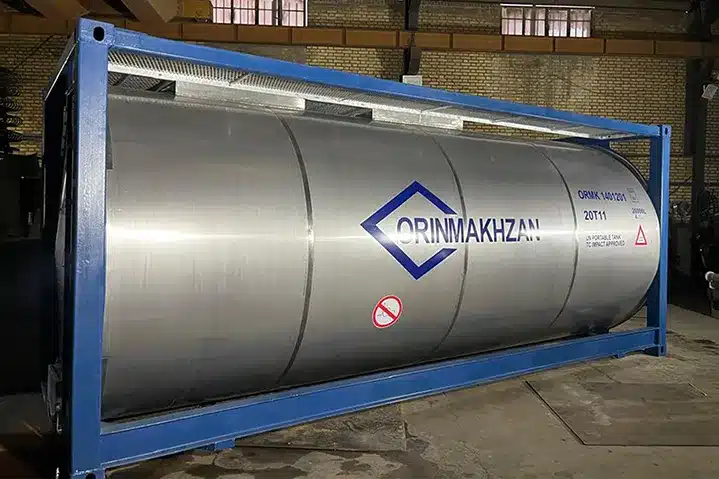
Isotank standards
An isotank is far more than a simple metal tank; it is an engineered asset designed under strict international regulations to ensure the safe transportation of multi‑million‑dollar cargoes across continents.
Isotank standards can be divided into three main categories.
Design and manufacturing standards (Blueprint Standards)
This group of standards defines the physical DNA of an isotank and ensures its structural safety and durability.
ISO 1496‑3: this is the most important code for global compatibility. In this section, the International Organization for Standardization (ISO) specifies the exact frame dimensions (20 or 40 feet), the location and strength of the corner castings, and the ability to withstand static and dynamic loads. Simply put, this standard ensures that your isotank can be handled seamlessly in any port, rail system, or trailer worldwide.
ASME BPVC Section VIII: developed by the American Society of Mechanical Engineers (ASME), this code focuses on the core of the isotank, namely the pressure vessel. It defines steel plate thickness, welding quality, and pressure testing methods, such as hydrostatic testing at 1.5 times the working pressure.
Transportation and material safety standards (Logistics and Safety Codes)
These codes govern how isotanks operate across different transport routes and for various types of cargo. Without these certifications, an isotank is not permitted to leave the factory.
IMDG (maritime), ADR (road), RID (rail): these three codes form a comprehensive set of regulations for the transport of dangerous goods. They specify valve types, required hazard markings, and cargo securing methods. For example, an isotank carrying sulfuric acid must meet very different requirements compared to one transporting edible oil.
CSC (Convention for Safe Containers): this serves as a “health certificate” for the container frame. Every isotank must carry a valid CSC plate, indicating that it has been periodically inspected, typically every 2.5 or 5 years, and is approved for safe transportation.
Inspection standards and third‑party validation
The credibility of an isotank is only complete when it bears the approval stamp of an independent and internationally recognized inspection body.
Role of inspection companies (such as Bureau Veritas, Lloyd’s Register, and the Iran Quality and Standard Inspection Company): these organizations act as a third eye. They supervise and verify the design process, material selection, welding quality, and final testing.
Why does this matter? When you choose an isotank, you are effectively placing your trust in this entire ecosystem of standards. A product that has successfully passed through this full chain, from ISO and ASME design requirements to third‑party inspection approvals, ensures that both your investment and your cargo are transported under the safest possible conditions.
The safety and reliability of isotanks depend on strict compliance with a comprehensive set of rigorous codes and standards. These standards ensure that the tank remains stable under the dynamic forces of transportation and internal pressure conditions.
Global standards for isotank transportation
For an isotank to be transported internationally, it must hold the following certifications:
IMDG Code: The International Maritime Dangerous Goods Code; mandatory for sea transport.
ADR: The European Agreement concerning the International Carriage of Dangerous Goods by Road; mandatory in Europe and many other countries.
RID: Regulations concerning the international carriage of dangerous goods by rail.
CSC (Convention for Safe Containers): A certificate that confirms the structural integrity and safety of the container frame for transportation and must be renewed periodically.
TIR (Transports Internationaux Routiers): The TIR Carnet is a customs document that enables the cross-border movement of goods with minimal customs formalities.
Global standards for isotank manufacturing
The manufacturing process of an isotank, from start to finish, is governed by the following engineering codes:
ISO 1496‑3: the primary and governing standard that defines container frame dimensions, specifications, and testing requirements.
ASME Boiler and Pressure Vessel Code (BPVC), Section VIII: the most authoritative and widely recognized global code for the design, fabrication, inspection, and testing of pressure vessels.
BS PD 5500: a British standard for pressure vessels that is used as an alternative to ASME in certain regions.
ITCO (International Tank Container Organisation): although this organization does not issue codes directly, it publishes guidelines and industry best practices for manufacturing, inspection, and maintenance that are followed by all reputable manufacturers.
Welding standards (AWS/ISO): specific welding standards that ensure weld quality and overall structural integrity of the tank and are typically applied as part of ASME requirements.
Key standards implemented in Orin Makhzan isotanks
ISO 1496‑3 frame standard: ensures that the isotank frame, in terms of dimensions and structural strength, is fully compatible with global transportation infrastructure (ships, cranes, trailers). Your product can be transported anywhere in the world without any limitations.
Pressure vessel standard ASME BPVC Sec. VIII: this code defines the shell and dish end thickness, material quality (316L stainless steel), and most importantly, welding standards, ensuring resistance to internal pressure. Your cargo is protected against the risk of leakage or rupture.
Final inspection and third‑party validation standard (Bureau Veritas): an independent and internationally recognized inspection body supervises the entire design, manufacturing, and testing process and issues the certificate of conformity.
Transportation standards ADR/RID/IMDG compliance: the design of all safety equipment such as valves, discharge routes, and nameplates complies with road, rail, and maritime transport requirements. Your isotank is ready for international journeys from day one.
🔗 Related reading: The proces of obtaining isotank certificationss
The logistics cycle: from loading to transportation and storage of isotanks
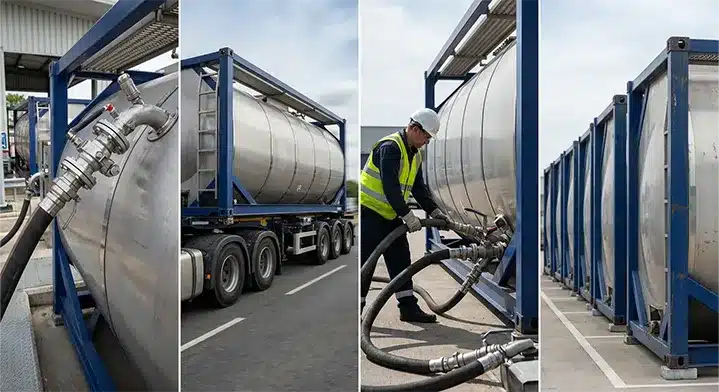
The transportation operation of isotanks from origin to final destination requires high precision and strict compliance with dangerous goods transport regulations when applicable.
- Loading stage
The tank filling process must be carried out in a controlled environment and by trained operators. Key principles include:
Type of material: classification of the cargo in accordance with IMDG and ADR determines whether ventilation, nitrogen purging, or corrosion‑resistant 316L steel is required.
Compliance with filling ratio (Filling Ratio): in order to maintain stability and prevent dangerous liquid sloshing (Surge Effect), the tank must be filled to a minimum of 80%. On the other hand, to manage thermal expansion of the liquid during transit, the maximum allowable level (typically 95% to 97%) must be calculated precisely in accordance with international regulations (IMDG) and the nature of the cargo.
Pressure and leakage control: before sealing, an air leak test is performed within the range of 2.7 to 4 bar.
These isotanks are equipped with calibrated safety relief valves and pressure gauges, which are active during loading to ensure initial safety.
- Transportation; stability along every route
During transportation, isotank safety is critical. This includes:
Securing: ensuring proper locking of the tank onto the container chassis or rail wagon.
Temperature management: applying continuous heating or cooling when required.
Documentation: carrying complete documentation (pressure test certificate, approvals from maritime authorities such as IMO, and RID/ADR certificates).
Road transport (Trucking): the tank is loaded onto a container chassis. On long domestic routes in Iran, regulations related to the transportation of dangerous goods issued by the Ministry of Petroleum and traffic police must be observed. Installation of GHS labels and UN Number placards on the tank body to indicate the material type and hazard class is mandatory. Before departure, the operator must inspect the twist locks and tractor brakes and record the results in the log book.
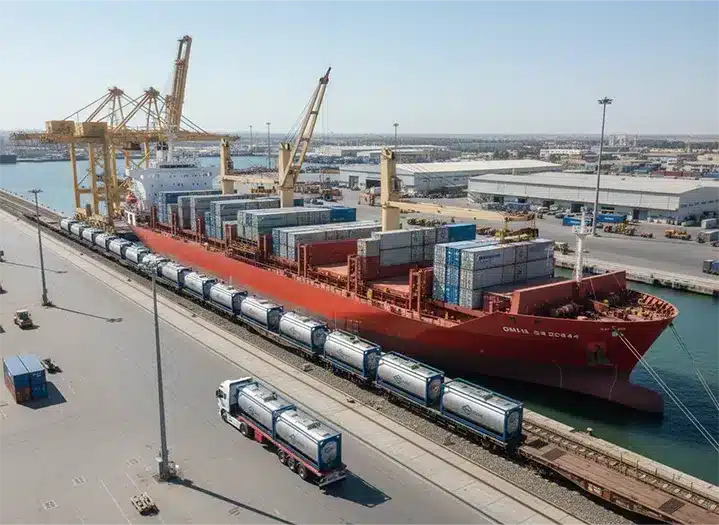
Ocean freight: the tank must be placed in the designated container position on board the vessel and secured using twist locks. The operator must declare the exact chemical specification, UN code, and hazard class in the Bill of Lading (B/L). Installation of corner locks and pressure monitoring of the tank at each port are required.
Rail transport: on international routes, isotanks are mounted on specialized wagons that provide higher stability compared to road transport. Inspection of the braking system and frame securing is required to prevent lateral impacts.
3. Heating stage
Many chemical and food‑grade cargoes become viscous or frozen at low temperatures. The heating process must be controlled. For food‑grade materials, low‑pressure steam is typically used to prevent burning or changes in product quality.
4. Discharge
Before starting the discharge process, the internal pressure of the isotank must be reduced to below 0.2 bar to ensure safe operation. Discharge is then performed through the bottom DN80 valve, which must be opened gradually to prevent hydraulic shock.
In tanks equipped with steam coils, indirect heating is carried out before discharge in order to reduce fluid viscosity and bring the temperature uniformly to approximately 60 degrees Celsius, without direct contact between heat and the product.
After completion of discharge, the isotank must be thoroughly washed and disinfected. Depending on the type of previous cargo, this process may include steam washing, the use of chemical detergents, and complete drying. At the end, a Cleaning Certificate is issued, confirming that the tank is ready for loading the next cargo.
5.Maintenance and storage; preserving tank and cargo integrity
After discharge or prior to the next loading, isotanks must be stored under conditions that prevent damage, corrosion, or chemical alteration of residues.
Ventilated and shaded environment: avoidance of direct sunlight to control thermal expansion and maintain temperature stability.
Away from oxidizing or corrosive substances: particularly for isotanks that previously carried corrosive chemicals.
Periodic inspection at 2.5‑year and 5‑year intervals: in accordance with ITCO Periodic Inspection guidelines, including hydrostatic testing, NDT testing of weld seams, and visual inspection of valves.
Inspection plate (CSC Plate): extension of its validity is mandatory.
For practical details, be sure to read: Safe transport and storage conditions for isotanks
Economic analysis – ROI advantages of isotank transportation in Iran (drums versus isotanks)
One of the most important reasons companies seek to purchase isotanks or use isotank transportation services is the significant economic advantages compared to traditional methods such as transportation in barrels or drums.
1.Operational cost comparison (Freight Cost)
Transporting bulk materials in small drums is considerably more expensive:
Labor costs: filling, discharging, and handling drums require substantially more labor.
Occupied space: drums occupy significantly more space on vessels, in warehouses, and on trucks due to the empty space between them.
Waste and contamination: during each filling and discharge operation, a portion of the product remains on the drum walls (heel or residue product).
In contrast, the capacity of an isotank (24,000 liters) allows large volumes of cargo to be transported in a single unit, with minimal labor and maximum utilization of transportation space.
2.Customs considerations and temporary admission in Iran
The use of isotanks in Iran generally falls into two main categories: permanent import or temporary admission.
Temporary Admission (TA): to facilitate the import of raw materials or goods that are imported in bulk and then packaged, temporary admission of isotanks is common. Iranian customs regulations allow isotanks to be imported under temporary admission by providing a bank guarantee or promissory note, and after discharge and return outside the country, they are cleared.
Port regulations: in Iranian ports (such as Shahid Rajaee Port), isotanks, due to their nature as pressurized tanks, must hold international shipping approvals (such as IMDG Code certification), and initial inspections are conducted by representatives of the Ports and Maritime Organization. Any tank used for transporting dangerous goods must have a valid dangerous goods transport certificate.
Safety and inspection considerations for isotanks
The most important factor in ensuring safety when using isotanks is strict compliance with periodic inspection programs mandated by accredited inspection bodies.
Standard inspection program:
Inspections are conducted based on ISO 1496-3 and the recommendations of inspection authorities:
Intermediate Inspection every 2.5 years:
Conducting a pneumatic pressure test up to 4 bar,
Checking the safety relief valve, valves, and gaskets for potential leakage,
Measuring shell thickness using ultrasonic testing in corrosion-prone areas.
Periodic Inspection every 5 years:
Hydrostatic testing with water at 1.5 times the MAWP (typically 6 to 9 bar),
Inspection of welds and heat-affected joints using NDT methods (visual and penetrant testing),
Renewal of the CSC plate (Convention for Safe Containers) and registration in the tank record book.
Additional safety guidelines:
Use of personal protective equipment (PPE), including safety goggles, chemical-resistant gloves, and respiratory masks during loading or unloading operations.
Reviewing the MSDS (Material Safety Data Sheet) for each cargo prior to operation.
Installing hazard labels based on the GHS system and the substance UN code.
Verifying the proper operation of the safety relief valve and pressure gauge before each trip.
Avoiding the use of direct steam for heating sensitive materials or residual fluids inside the tank.
Further reading: Isotank inspection checklist
Advanced technical considerations and future technologies
The isotank industry is continuously evolving to adapt to the demands of more specialized cargoes and increasingly stringent regulatory requirements.
1.Advanced construction materials and fittings
Today, the focus is on specialized alloys that provide greater resistance to strong acids and bases. In addition, valve systems equipped with leak detection sensors are being implemented to issue immediate alerts in the event of even minor failures in gaskets or valves.
2.Future technology – Smart Tanks
The concept of smart tanks, or intelligent isotanks, is shaping the future of bulk logistics. These tanks are equipped with Internet of Things (IoT) technology and report the following data in real time:
Real-time temperature and pressure monitoring: continuous data transmission to a control center.
Location tracking (GPS/GSM): enabling precise monitoring of the transport route.
In-built weighing systems: accurate measurement of remaining cargo volume for discharge planning.
Valve opening monitoring: ensuring that discharge valves remain closed during transportation.
These technologies enable predictive maintenance and optimization of energy consumption during heating processes.
Conclusion
Isotanks are recognized worldwide as a standard, safe, and cost-effective solution for transporting liquid cargo. Adherence to international standards (ASME and ISO), strict compliance with safety and inspection requirements, and selecting a reputable manufacturer are the key factors for successful, efficient, and safe use of this industrial transportation system. Isotanks not only simplify transportation but also safeguard both capital and cargo.
If you are a manufacturer or exporter of chemical or food-grade products and are seeking a reliable, inspected isotank that complies with global standards (suitable for export to Europe, Asia, and the United States), it is recommended to review the product page below for specialized consultation and evaluation of custom design capabilities:
🔗View isotank product specifications and images at Orin Makhzan
🔗Read more questions on the isotank FAQ page
Frequently Asked Questions
What Is an Isotank and What Are Its Applications?
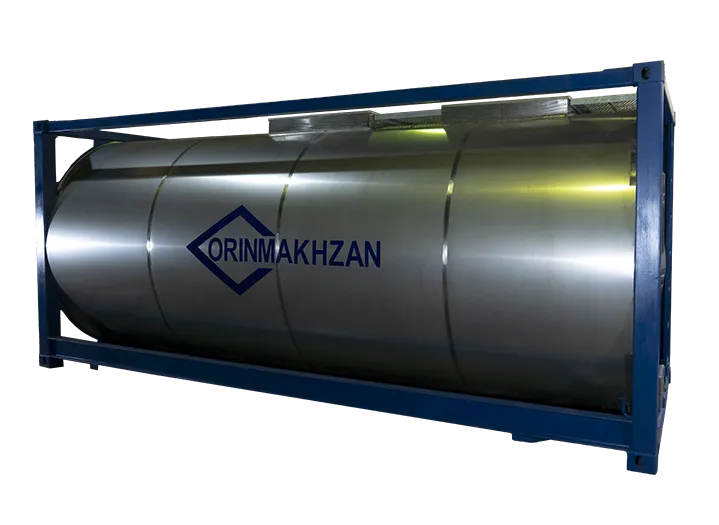
An isotank is an industrial pressurized vessel installed within a steel frame with standard container dimensions, typically 20 feet and, in certain special applications, 40 feet, and is used for the international transportation of bulk liquids, chemical substances, and hazardous materials. These tanks are generally manufactured from stainless steel, and their design and construction comply with engineering standards such as ASME BPVC Section VIII and dangerous goods transportation regulations, enabling the safe movement of cargo across road, rail, and sea transport.
How Long Is the Useful Lifespan of an Isotank?
The nominal service life of an isotank ranges between 20 and 30 years. However, this lifespan is highly dependent on periodic inspections, especially hydrostatic testing and thickness measurements, as well as the extent of exposure to corrosive chemical substances.
Is an Isotank Suitable for Food-Grade Materials?
Yes, models known as Food Grade Tanks are designed for this purpose. These tanks comply with very strict sanitary standards, including the use of 316L stainless steel, high-quality mirror-finished welds, and fully sanitary valves that enable clean-in-place (CIP) capability.
What Is the Capacity of a 20‑Foot Isotank?
On average, the standard capacity of a 20-foot isotank ranges from 24,000 to 26,000 liters. This capacity is influenced by the tank’s maximum gross vehicle weight (GVW), typically around 24,000 kilograms, and the density of the transported substance.
What Is the Difference Between an Isotank and a Flexitank?
The main difference lies in structure and reusability. An isotank is a rigid, pressurized metal structure designed for repeated use in multimodal transport networks, whereas a flexitank is a flexible bladder installed inside a 40-foot container and is single use.
Is It Possible to Rent an Isotank?
Yes, many large logistics companies and tank operators offer short term rental services for a single export shipment as well as long term leasing. This approach is cost effective for companies that do not wish to invest in a heavy initial capital purchase.
What Does the UN Code Mean on an Isotank?
The UN Code (United Nations Number) is a unique four digit number assigned by the United Nations to identify hazardous materials. This code is displayed on the tank’s safety labels and helps authorities and emergency responders accurately identify the nature of the transported substance during emergencies.
How Should You Choose Between a 20‑Foot and a 40‑Foot Isotank?
Three main factors are decisive:
Density of the substance (if SG > 1, choose a 20-foot tank)
Transport route (if the port or customs has restrictions, 20-foot)
Transport cost per liter (for low-density materials, a 40-foot tank is more cost effective)